Lok Sabha elections: Violence, threats and gunfire mars phase 1 polls in Manipur
Web Desk
- {{topics.sectionTitle}}
- {{item.tagTitle}}
HOT AND HAPPENING

Lok Sabha elections: Over 62 per cent polling in phase 1
West Bengal recorded a voter turnout of 77.57 pc, while Manipur 69.13 pc
By PTI
April 19, 2024


Why are we not seeing enough antiques in art auctions?
The laws that are meant to save them, have created an illicit market instead

Vidya Balan in candid conversation on "Do Aur Do Pyaar" | THE WEEK
Powerhouse Vidya Balan in a candid conversation on her forthcoming film, the keenly awaited musical romantic comedy, "Do Aur Do Pyaar" (releasing on 19th April), co-starring Pratik Gandhi, Ileana D'Cruz and Sendhil Ramamurthy.
-
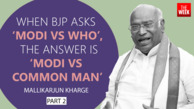
Exclusive interview with Congress President Mallikarjun Kharge | INC | Part 2 | THE WEEK
Mallikarjun Kharge is facing his toughest challenge since he became Congress president in October 2022. THE WEEK caught up with Kharge for a detailed interview where he talks about Prime Minister Narendra Modi, electoral bonds and the Ram Temple
-
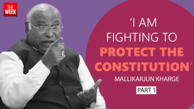
Exclusive interview with Congress President Mallikarjun Kharge | INC | Part 1 | THE WEEK
THE WEEK caught up with Mallikarjun Kharge for a detailed interview where he talks about Prime Minister Narendra Modi, election guarantees, and the challenges the Congress party is encountering in the upcoming elections.
-

Interview with former IAS officer and Congress candidate Sasikanth Senthil | THE WEEK
Former IAS officer Sasikanth Senthil is all set to contest Lok Sabha polls from Tamil Nadu's Tiruvallur. THE WEEK caught up with the Congress candidate for a quick interview where he talks about his campaign and the Congress manifesto
National
- Apparent Israeli attack on Iran's territory intercepted no damage to any installation Envoy
- Bengal man held for duping Delhi resident of over Rs 5 lakh in cyber fraud
- Polls not just to elect legislators but to continue YSRCP’s welfare schemes Jagan Reddy
- Congress backing polygamy by supporting personal laws Ravi Shankar Prasad
- Chhattisgarh 65.29 pc voter turnout in Bastar CRPF man killed officer injured in 2 incidents
International
- NATO secretary-general says some allies have air defence systems they could give to Ukraine
- Iran fires at apparent Israeli attack drones near Isfahan air base and nuclear site
- Police in Paris detain a man at Iran's Consulate after reports he was armed but find no weapons
- Ukraine Israel aid back on track as House pushes past hardliners toward weekend vote
- Following are the top foreign stories at 2050 hours
Entertainment
- Vidyut Jammwal Arjun Rampal's 'Crakk' to have its digital premiere on Disney+ Hotstar
- Gurinder Chadha announces new film 'Christmas Karma' Kunal Nayyar to play lead role
- Actors can contribute to society through cinema says Raveena Tandon
- Gurinder Chadha announces new film 'Christmas Karma' Kunal Nayyar to play lead role
- 'The Family Man' duo Sharib Hashmi Sunny Hinduja teaming up for new play
Business
- Indian airlines cancel reschedule Dubai flights due to restrictions
- Digi Yatra users'' data safe info stored only in individual''s mobile device Digi Yatra Foundation
- Wipro Q4 net profit falls 7.8 to Rs 2 835 cr new CEO flags uncertainty in macro environment
- Tesla recalling nearly 4 000 Cybertrucks because accelerator pedal can get stuck
- Indian airlines cancel reschedule Dubai flights due to restrictions
Mohanlal and Shobana were last seen in Mampazhakalam

EDITOR'S PICK
Challenges galore as Congress fights for survival
Lack of money and fissures within the opposition are hurting the party
By Soni Mishra
'All anti-people laws by BJP will be reviewed': Chidambaram
Chidambaram is Congress's manifesto maestro
By Soni Mishra
'BJP wants to manipulate the election': K.C. Venugopal
We are living in a dark era
By K.C. Venugopal
'When BJP asks Modi vs Who, the answer is Modi vs Common Man': Mallikarjun Kharge
Kharge is facing his toughest challenge since becoming the Congress president
By Soni Mishra, Midhun M. Kuriakose and V.S. Jayaschandran/Bengaluru
Kejriwal's political voyage has come to a full circle
Will Kejriwal emerge stronger from his imprisonment, is the question
By Soni Mishra and Mohit Sharma
'Love Sex Aur Dhokha 2' review: Dibakar Banerjee simulates three virtual worlds, but it's not clear to what end
LSD2's virtual reality scenery lacks purpose
By Suparna Sharma
-
'Do Aur Do Pyaar' review: Marriages are not made in heaven
By Suparna Sharma -
3 Body Problem review: This sci-fi series is a visual treat
By Akhila Chandran
{{gallery.albumList[0].albumTitle}}
{{item.galleryDescription}}
-
Ageless Knees Reviews (A Detailed Report) What Real Customers Are Saying About This 7-Minute Pain Relief Program?
-
Best astrologers in India 2024 Swami Ramananda Guruji and others
-
3 Best sites to Buy Linkedin Followers (Real & Cheap)
-
Immediate AI Eprex Review 2024 Scam Exposed By Crypto Traders!
-
Reasons Why Niva Bupa is the Greatest Option for 2024 Health Insurance Plan